









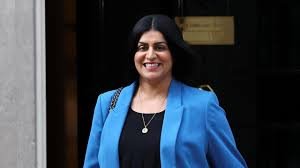
In her first major interview as Home Secretary, Shabana Mahmood has set out her intention to reform migration rules. She announced that people seeking to settle in the United Kingdom will, in future, need to demonstrate not only employment but also their wider contribution to society.

Speaking to the Sun on Sunday ahead of Labour’s annual conference in Liverpool, Ms Mahmood made clear her concerns about the current pace of migration. She acknowledged that migration “has been too high” and added, “The pace of that migration has been very, very fast. I totally understand why people have concerns about it.”
She reaffirmed the government’s commitment to legal migration, saying, “We need legal migration, it is a good thing. We are a country that has always welcomed people who want to come and work here.” Yet she argued that work alone should not be the only measure of worth. “But I think in addition to living and working here there is a bigger thing to do as well which is to make sure that people are making a contribution to their wider community and wider society.”
The Home Secretary confirmed that ministers are examining how to ensure indefinite leave to remain is tied not only to a person’s job but also to their wider social role. The move hints at a shift in Labour’s migration policy, at a time when Reform UK has pledged to go further by scrapping settled status altogether for all non-EU migrants.
Ms Mahmood was also critical of the decision to house illegal migrants in hotels, describing it as a “total disaster for the country.” She stressed that securing Britain’s borders is “fundamental to holding the country together,” adding, “I know if I’m not able to get this mess sorted out, then there will be more division in our country. The far right is on the rise. I think that’s a dangerous moment for the country.”
She also committed to reforms of human rights law before Christmas, arguing that the European Convention on Human Rights and other treaties have been “used in a way that was never intended” to prevent the deportation of illegal migrants.
A Social Worker’s Perspective
As a practitioner who works daily with vulnerable people, I see both the potential value and the risks of such proposals. Encouraging migrants to engage actively in their communities can foster integration, mutual understanding, and belonging. It may also help the public recognise the enormous contributions migrants already make, whether in our health service, social care, or voluntary roles that often go unseen.
Yet, the principle of “proving” one’s social contribution carries challenges. Many contributions are invisible, unmeasured, or undervalued. A care worker supporting elderly people, a cleaner keeping public spaces safe, or a parent raising children in difficult circumstances may all be contributing profoundly, even if not in ways that can be easily documented. If policy does not carefully define what “social contribution” means, it risks excluding precisely the people who are most embedded in community life.
There is also the danger of creating division between those deemed “worthy” of settlement and those who are not. Stability, which indefinite leave provides, is vital for people to thrive, contribute, and integrate. If settlement becomes an elusive goal tied to shifting criteria, migrants may feel marginalised rather than encouraged.
That said, there is a positive opportunity here. If government truly wishes to link settlement to community contribution, it must also invest in creating avenues for migrants to participate meaningfully in local life. That means accessible volunteering schemes, fair recognition of unpaid work, and support for integration programmes. It also requires a broader cultural shift in how society values contribution, ensuring it is not confined to high salaries or visible accolades but extends to the everyday, often invisible acts that keep communities together.
The Home Secretary is right to say that the pace of change in migration has unsettled parts of the population. She is also right that failure to address these concerns risks fuelling division and emboldening extremist voices. But if reforms are to succeed, they must balance accountability with fairness, and they must celebrate the full spectrum of contributions migrants bring to Britain.
In the end, building stronger communities will not come from setting rigid barriers alone. It will come from ensuring that all who call this country home feel valued, recognised, and supported to play their part.
Written by Christian Aboagye, Social Worker, Mental Health Practitioner, Elected Governor for Greater Manchester Mental Health Services (Social Care Staff), and Youth Organiser for NDC Manchester Branch